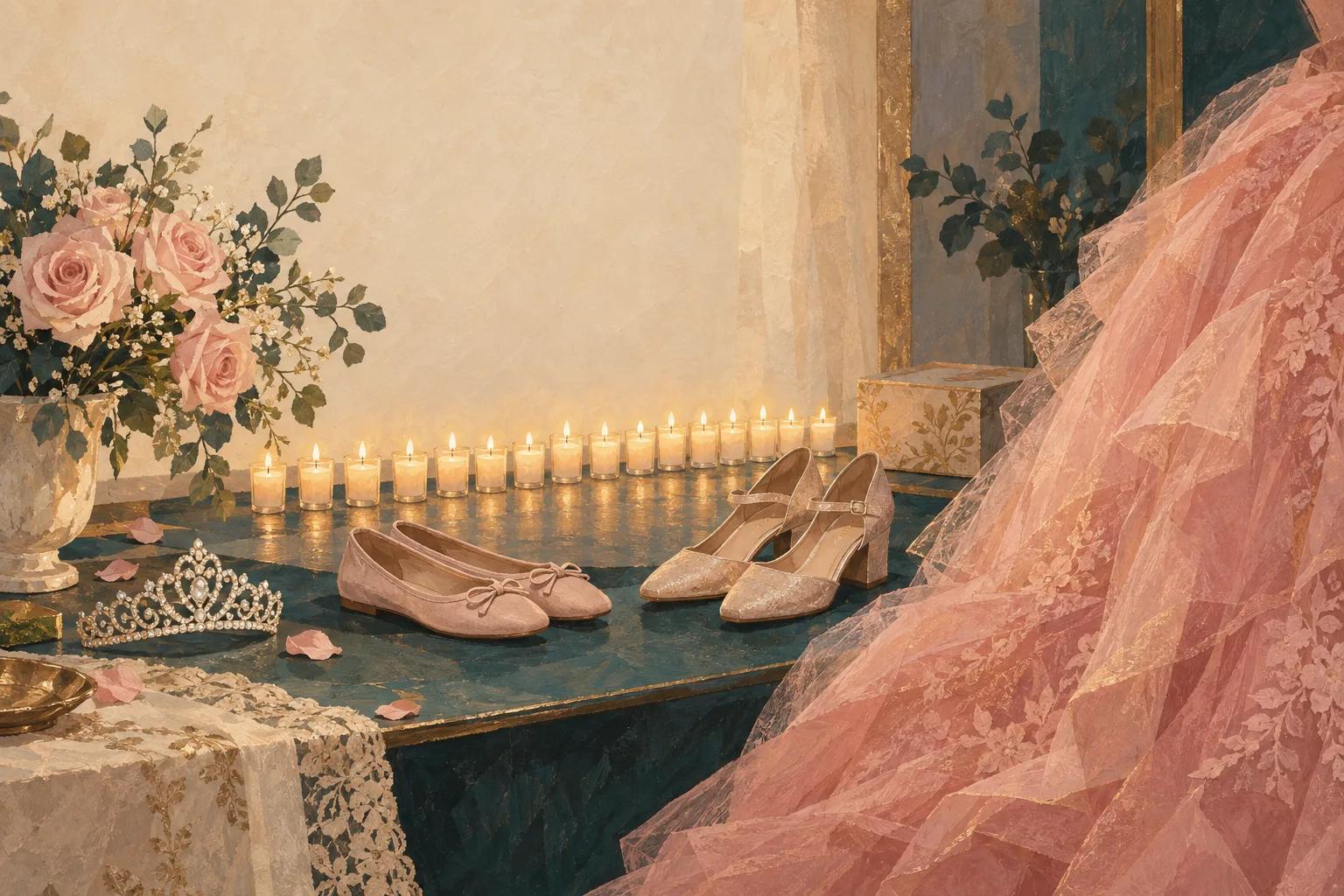
A 15th birthday is so important in Latin America because the quinceañera, also called the quince años, is the one birthday that works as a public rite of passage. The family presents its daughter to relatives, godparents, neighbours and friends as a girl leaving childhood, often with a thanksgiving Mass, a first waltz with her father and a party that relatives save and travel for. Researchers who have studied the celebration find that its weight comes from what it does for the family, gathering its people and showing its pride and standing, far more than from its much-debated origins.
The quinceañera is celebrated, with local differences, in most Latin American countries and across nearly all social groups, as the sociologist Robin Cavagnoud notes in his study of the 15th birthday in Peru. Field studies from Mexico, Cuba, Peru, Ecuador, Argentina, Brazil and Latino communities in the United States show the same core with very different details.
What is a quinceañera?
A quinceañera is the celebration of a girl's 15th birthday, and the word also names the girl being celebrated. Spanish speakers call the event the quince años, the fiesta de quince or simply los quince, and in Mexico it is often written XV años. In Brazil the equivalent is the festa de 15 anos, also known as the baile de debutantes, or debutantes' ball, according to Gheysa Gama's study of Brazilian 15th birthday parties.
The quinceañera carries more weight than an ordinary birthday because families treat it as an official presentation to society. In Peru it is considered more notable in a girl's life than her first communion or her school graduation party, Cavagnoud writes, citing the researcher Olthoff. The celebration is reserved for girls: Cavagnoud in Peru and the anthropologist Heidi Härkönen in Cuba both note that boys' fifteenth birthdays receive no comparable ritual. Other cultures single out a different age in the same way: in Japan it is the 60th birthday, kanreki, when the zodiac calendar returns to the year of birth.
Why is the quinceañera celebrated at 15?
Historians have not documented a single reason why the celebration settled on fifteen. The record does show what the age came to mean. In the early 20th century, urban elites in Mexico held these parties "to present to society the nubile, marriageable young woman", the anthropologist Cristina Oehmichen Bazán told El Universal (our translation).
Today families and the Church give the age a different meaning: growing up. The Catholic blessing approved for the occasion in the United States describes fifteen as "the passage from childhood to adolescence" (Order for the Blessing on the Fifteenth Birthday), and the Peruvian families Cavagnoud interviewed describe the party as the point where childhood ends. A man who danced as a chambelán, a formal escort, at Mexico City quinces in the 1960s told El Universal that families threw the party for the pleasure of celebrating a daughter.
Where did the quinceañera tradition come from?
The two most repeated origin stories, an Aztec coming-of-age rite and a custom brought to Mexico by Empress Carlota, are the least supported. Historians trace the modern party to debutante balls held by Latin American elites in the late 19th and early 20th centuries, modelled on presentations of young women to society in Europe and the United States, which working-class families took up from the 1950s. The table sets the popular claims against what the historian Mayavel Saborío found in her study of the quinceañera's history and what El Universal reported.
| Common claim | What the historical record shows |
|---|---|
| The quinceañera comes from the Aztecs | The 16th-century friar Bernardino de Sahagún describes Mexica parents holding a solemn family rite when a daughter reached "the years of discretion", to tell her she was now a woman and explain her duties. Saborío notes that this private instruction has little in common with today's public fiesta. |
| Empress Carlota brought the custom to Mexico in the 1860s | Saborío traced the claim to a 2004 Miami Herald article by Maricel Presilla, a specialist in Latin American food traditions. She found no mention of it in the 19th-century chroniclers Guillermo Prieto, Manuel Payno and Ignacio Manuel Altamirano, or in Clementina Díaz y de Ovando's study of Mexican balls. The claim remains unverified. |
| The party began as an elite debutante ball | Documented. On 11 September 1891, María Landa y Escandón was presented to society at a "baile blanco", or white ball, recorded by Díaz y de Ovando and cited by Saborío. Similar balls for girls of "high society" were held in several Latin American countries. |
| Ordinary families adopted it | Documented. Around the mid-1950s the balls reached working-class neighbourhoods, fell out of use among the elites who had started them and absorbed new elements, including the American sweet sixteen (El Universal, quoting Saborío). |
| The customs are the same everywhere | The customs travel. El Universal describes flowers for the Virgin Mary and the last doll as Mexican traditions that spread across Latin America, and the change of shoes as a custom from Puerto Rico. |
In Cuba, Härkönen's interlocutors in Havana traced the quince to presentations of girls at Spanish colonial elite gatherings, a history the anthropologist summarises in her chapter on quinceañeras in contemporary Havana.
The families who celebrate quinces often answer the origin question differently from historians. The anthropologist Mariela Chervin, who followed quinceañeras in Córdoba, Argentina, for her doctoral thesis, found that the published origin stories neither interested the families nor sounded familiar to them. What they talked about were the quinces of aunts, sisters, mothers and grandmothers, the parties some of them never had, and the quinces still to come for daughters, nieces and goddaughters. Chervin notes that the anthropologist Karen Mary Dávalos reached a similar conclusion among Mexican women in Chicago in the 1990s: for the families, the tradition lives in remembered parties.
What does a quinceañera mean in the Catholic Church?
In the Catholic Church, a quinceañera Mass or blessing gives thanks for the girl's life and asks God's blessing on the years ahead; it is not a sacrament. The United States Conference of Catholic Bishops approved an Order for the Blessing on the Fifteenth Birthday in 2004, and the Vatican's Congregation for Divine Worship confirmed it in 2007 for the dioceses of the United States (decree and text; USCCB overview). The rite can take place within Mass or outside it. It invites the young woman to commit to living a Christian life, allows her godparents or sponsors to present blessed objects such as a medal, a Bible or a rosary, and allows her to bring flowers to an image of the Virgin Mary.
The Catholic rite of passage from childhood to adult life is confirmation, Saborío points out, and some priests decline to take part in quinceañeras because they consider the spending wasteful. How often a Mass is part of the day varies widely. In Peru, Cavagnoud found a thanksgiving Mass mainly among the most religious families, after which the girl leaves her bouquet for the Virgin Mary. In a 2017 survey of 100 women in Quito, 26 percent had kept both a Mass and a formal party.
What happens at a quinceañera, and what does each ritual mean?
No two quinceañeras follow the same programme, but the recurring rituals each act out the move from childhood in front of the family. The table maps the common elements to the meaning researchers record and the places where they documented them.
| Ritual | What it signals | Where it is documented |
|---|---|---|
| Entrance and first waltz with her father | The father presents his daughter, then she dances with other male relatives or a partner | Peru (Cavagnoud), Cuba (Härkönen), Argentina (Chervin) |
| Changing from flat shoes to heels | Leaving girlhood; the anthropologist Lorena Favier also reads the heel, the waltz and the crown as symbols of social ascent | Ecuador (Quito survey), Brazil (Gama); a custom from Puerto Rico according to El Universal |
| The last doll | Its name marks the end of childhood play; in Brazil the girl hands a doll on to a younger girl | Mexico (El Universal), Brazil (Gama) |
| Crown or tiara | Femininity and, for Favier, social ascent; worn at the most traditional parties | Peru (Cavagnoud), Mexico (Favier in El Universal) |
| Flowers for the Virgin Mary | Thanks and devotion, usually after the Mass | Mexico (El Universal), Peru (Cavagnoud), the US rite (USCCB) |
| Family speeches and a toast | Relatives say publicly how proud they are to see her grow up, the father first | Peru (Cavagnoud), Ecuador (Quito survey) |
| Candle ceremony, or tree of life | The girl publicly honours fifteen guests or groups, each given a candle with a dedication she has written | Argentina (Chervin) |
| A jewel from a relative | A family gift for the new stage of life | Brazil (Gama) |
| Court of damas and chambelanes | Friends who escort her and dance a rehearsed choreography; fourteen couples was a common size in 1960s Mexico City | Mexico (El Universal); none found in Córdoba (Chervin) |
| Photos and video | The lasting record of the day, shared with relatives near and far | Cuba, where families call the photos the most important part (Härkönen); Peru (Cavagnoud); the United States (Saborío) |
How does the quinceañera differ across Latin America?
Every country keeps the core of a presentation, a waltz and a family party, while the details change from place to place and travel with migrants. Each study below describes one place at one time, so the descriptions show typical forms, and families everywhere adapt them.
How is a quinceañera celebrated in Mexico?
In Mexico the fiesta de XV años often begins with a thanksgiving Mass, after which the girl offers flowers to the Virgin Mary, and the party can include a court of damas and chambelanes, a waltz with her father, a Strauss waltz and the gift of a last doll, according to El Universal. In 1960s Mexico City, the paper recalls, fourteen damas and fourteen chambelanes marched onto the dance floor ahead of the quinceañera, and families who could afford it hired an orchestra and even a pumpkin-shaped carriage. A woman who celebrated her quince in the 1980s told the paper that preparations began six months ahead, with the family making the invitations and decorations by hand.
How is a quinceañera celebrated in Cuba?
In Havana, the quince grew out of colonial elite presentations, shrank to family meals and small fiestas in the stricter years after the 1959 revolution, and returned as a grand party in the 1990s, Härkönen writes. She describes it as the mother's ritual: mothers organise it, may save for years, and are congratulated at the party for raising their daughter. The girl traditionally waltzes with her father, who then gives her to a dance partner. The professional photo shoot is what Härkönen's interlocutors considered the most important part of the whole ritual.
How is a quinceañera celebrated in Peru?
The typical Peruvian quinceañera is a family party, Cavagnoud found. The girl enters with her father and dances her first waltz with him, then with other male relatives in order of closeness, and school friends perform a choreography with her. Each relative, starting with the father, then says a few words of pride, a toast opens the buffet, and younger music takes over for the rest of the night. Cavagnoud describes this as the most common form in Peru, shared across social classes and especially popular among families of modest means.
How is a quinceañera celebrated in Ecuador?
In the 2017 survey of 100 women in Quito by Emmanuella Charles, Vanessa Moreno, Belén Robles and Diego Apolo, 67 percent said their families still celebrate quince años. The rituals respondents mentioned most were a toast, a speech by the father, a traditional dance and the change from flat shoes to heels, and 85 percent said parents, grandparents or aunts had organised the celebration. The researchers selected the sample by judgment and caution against generalising from it.
How is a fiesta de 15 celebrated in Argentina?
In Córdoba, Chervin found parties built around the girl's entrance, usually escorted by men such as her father, grandfathers, uncles or godfathers, with guests waiting to receive her with candles, roses or raised glasses. Many parties also included the candle ceremony and a guest book in which guests write messages to the quinceañera. Chervin found no chambelanes locally, though men still had priority for the waltz. Some teenagers she spoke with called the candle ceremony corny and left it out, along with balloons and shows, while still calling their party a fiesta de 15.
How is a 15th birthday celebrated in Brazil?
Brazilian families hold a festa de 15 anos, and some communities organise a collective baile de debutantes, Gama reports. The waltz remains the defining moment and is increasingly choreographed, and the day can include a jewel from a relative, a doll handed on to a younger girl and the change from flats to heels. Gama reads the party as both a family rite of passage and a consumption ritual shared with friends, and notes that some girls now choose a trip abroad instead of a party.
How do Latino families in the United States celebrate quinceañeras?
In the United States the quinceañera has become a shared Hispanic tradition that mixes customs from across Latin America. Saborío notes that Mexican customs such as flowers for the Virgin and the last doll now appear at Ecuadorian, Puerto Rican, Dominican, Cuban and Central American quinces there, along with the Puerto Rican change of shoes and elements borrowed from the American sweet sixteen. Catholic parishes can use the bishops' approved blessing, which is published in English and Spanish.
Why do families spend so much on a quinceañera?
Families spend heavily on a quinceañera because the party shows their pride and standing to everyone they know, and because it often fulfils a parent's own unmet wish. Lorena Favier told El Universal that on that night, metaphorically, "the quinceañera, her family and her guests enter another social category: that of the aristocracy" (our translation). For Latino families in the United States, Saborío describes the party as a way of telling the community that the family has made it.
The sums can be large. Saborío reported in 2010 that US quinceañeras cost between $5,000 and $100,000, with an average of roughly $15,000 to $18,000, while a home party with padrinos and madrinas, godparents who sponsor parts of the celebration, could cost the parents around $1,000. In Lima, Cavagnoud found families investing hundreds or thousands of dollars to make the day a success in front of extended family and friends, and in Havana, Härkönen found mothers saving for years.
The spending is also personal. For many first- and second-generation migrant families in the United States, Saborío writes, the quince is the mother's dream, because she had no party of her own when there was no money for one, and parents give their daughters what poverty or exile denied them. The cost draws criticism too: 27 percent of the women surveyed in Quito called a big party unnecessary spending.
How can relatives abroad take part in a quinceañera?
Relatives who live abroad take part by travelling home for the party, by helping to pay for it, and by adding their voice to the keepsakes the family keeps from the day. Härkönen found that Cuban migrants sometimes return to Havana for quince celebrations, while Cubans on the island receive money, goods and visitors for their parties, and quince photos circulate on social media between the island and the diaspora. In Córdoba, many mothers and daughters told Chervin that the presence of loved ones, including relatives coming from elsewhere, was part of what made the day matter.
A relative who cannot travel can still be part of the day's record. The candle ceremony and the guest book give guests a place to be named or to write to the quinceañera, and Chervin lists video projections among the moments families planned for their parties. Photos and video matter most of all: without a photo album and a video, Saborío writes, it is as if the girl had not had her quinceañera.
For a godparent, aunt or grandparent abroad who wants to send a film, yume's The Museum of Us turns six photos of moments shared with the birthday girl into a birthday video of just under a minute. The photos hang in a museum as they are, uncropped and with no faces altered, while a song written for the video plays. yume then creates a closing scene of the sender raising a glass to her on a terrace under golden fireworks, made from one to four of the sender's own photos, and the film ends on a card reading Happy birthday with her name, an optional message and the sender's name. The video is sent to the sender, who can pass it to the family to play at the party or keep with the photos. The song and the card are in English only, so it suits families at home in English, and it adds to the day's own traditions, such as a candle dedication or a message in the guest book.
Is the quinceañera tradition changing?
The quinceañera is changing gradually: more girls choose smaller gatherings, trips or parties with friends, and some drop rituals they find old-fashioned, while most families in the studies still mark the day. In the Quito survey, 46 percent of the women preferred a small gathering with close family, and 17 percent had celebrated with a trip or an informal party. In Lima, Cavagnoud found middle- and upper-class girls trading the family party for trips to the United States or Europe or for parties among friends, a shift that moves the celebration from relatives to peers and also signals social class. Gama found the same pull toward travel in Brazil, and in Córdoba teenagers who wanted a modern party cut the candle ceremony and the reading of letters while keeping the name.
The tradition has always attracted debate. Chervin observes that most studies read the quince as reproducing social and gender inequalities, while she and the Argentine anthropologist Silvia Citro also emphasise how girls reinterpret the celebration and shape it for their own purposes. Härkönen notes that in Havana the quince has become more professional and commercial, and that today's parties reflect the island's growing inequality, including the gap between families who receive money from abroad and those who live on local wages.
The quince has also shown that it can come back. In Cuba it survived decades of political disapproval as a small family meal and returned as a full party in the 1990s, and in Córdoba the families Chervin followed were already talking about the quinces to come, including those of babies not yet born.